Table of Contents
Three entrepreneurs. Three failing products. One legendary cocktail.
The Moscow Mule history is one of the best origin stories in cocktails—not because the drink is complicated, but because it almost didn't exist. In 1941, three people with three unsellable products walked into a Hollywood bar and accidentally created one of the most iconic drinks of the 20th century.
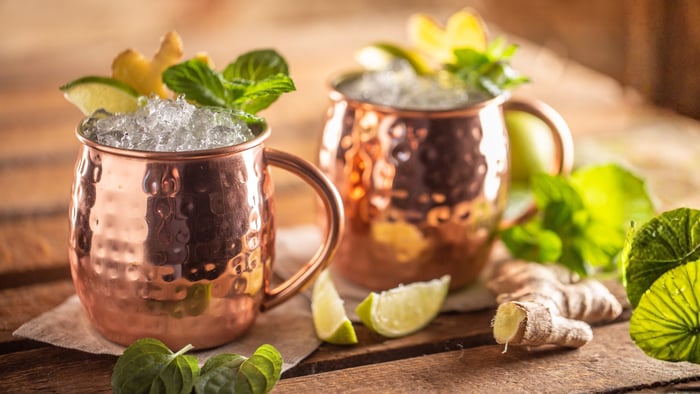
The drink itself is simple: vodka, ginger beer, lime, served in a copper mug. But the Moscow Mule origin story reveals how smart marketing, desperation, and the right timing can turn failure into legend. If you've ever wondered who invented the Moscow Mule or why copper mug Moscow Mule became the standard, this is the story.
What's in This Article
- The Cock 'n' Bull Meeting That Started It All
- Why Nobody Wanted Vodka in 1940s America
- The Moscow Mule Copper Mug History
- The Polaroid Marketing Campaign
- The Moscow Mule Today
- FAQs About Moscow Mule History
The Cock 'n' Bull Meeting That Started It All
The Cock 'n' Bull Moscow Mule story begins at a pub on Hollywood's Sunset Strip—a place where deals were made, celebrities drank, and cocktails were invented. In 1941, three people with nothing in common except bad luck found themselves at the bar.
John Martin had recently purchased Smirnoff vodka for $14,000. It seemed like a bargain until he realized Americans wanted nothing to do with vodka. The spirit was seen as foreign, harsh, and vaguely suspicious. Bartenders would shake their heads before he finished his pitch.
Jack Morgan owned the Cock 'n' Bull pub and had a basement full of his own ginger beer that nobody was buying. Americans in the 1940s preferred whiskey, beer, and the occasional gin martini. Ginger beer wasn't on anyone's radar.
Sophie Berezinski had immigrated from Russia carrying 2,000 copper mugs she'd designed with her father at his Moscow copper factory. She'd been going door to door in Hollywood trying to sell them, with no luck. Her husband had given her an ultimatum: sell the mugs or they're going in the trash.
That day at the Cock 'n' Bull, fate intervened. The three of them started experimenting. Vodka plus ginger beer plus lime juice, served in a copper mug. After several rounds of tasting, they had something worth drinking—and more importantly, something none of them could sell alone but all of them could sell together. The Moscow Mule origin was born from necessity, not inspiration.
Why Nobody Wanted Vodka in 1940s America
To fully understand Moscow Mule history, you need to understand how unpopular vodka was in America at the time.
In the early 1940s, vodka was virtually unknown in the United States. It was associated with Russia—a country Americans viewed with suspicion. Whiskey, gin, and bourbon dominated every bar. Bartenders didn't know what to do with vodka. Customers didn't know what it tasted like. And nobody was asking for it.
John Martin had a real problem. He'd bought the Smirnoff name and distillery, but he couldn't give the stuff away. "Vodka?" bartenders would say. "We don't serve that here." The default answer was always no.
The Moscow Mule changed everything—not by hiding the vodka, but by giving it a story, a vessel, and a reason to exist. It turned a default rejection into a deliberate choice.
The Moscow Mule Copper Mug History
The question "why copper mug Moscow Mule?" gets asked constantly. The Moscow Mule copper mug history has both practical and marketing answers.
The Practical Reasons
- Temperature: Copper is highly conductive. It takes on the temperature of its contents almost instantly, keeping your drink colder longer and delivering that icy sensation to your lips with every sip.
- Aroma: The metal rim enhances the volatile aromas of ginger and lime, making the drink smell brighter and more refreshing.
- Carbonation: Some believe the slight oxidation from copper helps maintain the fizz of the ginger beer longer.
- Aesthetic: The condensation beading on a frosty copper mug is simply beautiful—it catches the eye and makes the drink look as good as it tastes.
The Marketing Reason
In a bar full of highballs and martini glasses, a gleaming copper mug stood out. People noticed it. They asked about it. And every time someone asked, the bartender got to tell the story—and sell another round.
Sophie Berezinski's unsold inventory became the drink's secret weapon. The copper mug wasn't just a vessel—it was a conversation starter, a visual identity, and a reason to remember. The Cock 'n' Bull Moscow Mule became instantly recognizable because of that mug.
The Polaroid Marketing Campaign That Made It Famous
After World War II ended, John Martin returned to selling vodka—but this time, he had a genius plan.
In 1947, Polaroid released the first instant camera. Martin saw an opportunity that would change Moscow Mule history forever. He packed a leather case with a bottle of Smirnoff, Cock 'n' Bull ginger beer, copper mugs, and his new Polaroid camera. Then he hit the road.
His pitch was brilliant: he'd walk into a bar, offer to make the bartender a Moscow Mule, and take their photo holding the drink. He'd leave one photo with the bartender and take one with him. The photo left behind was instant advertising. The photo he kept was proof for the next bar that the drink was catching on.
It was viral marketing before the internet existed—social proof captured on film.
In Hollywood, Martin took it further. He got celebrities to pose with the copper mugs—some even had their names engraved on personal mugs displayed behind the bar. The Moscow Mule became the drink of the Sunset Strip, and from there, it spread across America. By the 1950s, Smirnoff went from unsellable to one of the top-selling spirits in the country.
The Moscow Mule Today
More than 80 years later, the Moscow Mule remains one of the most ordered cocktails in America. The drink has spawned countless variations:
- Kentucky Mule: Bourbon instead of vodka
- Mexican Mule: Tequila instead of vodka
- London Mule: Gin instead of vodka
- Dark 'n' Stormy: Dark rum with ginger beer (the Mule's Caribbean cousin)
But the original—vodka, ginger beer, lime, copper mug—endures. What made the Moscow Mule successful wasn't just the taste. It was the story, the presentation, and the understanding that a great drink is more than liquid in a glass. It's an experience you choose to create.
What the Moscow Mule Teaches Us About Great Drinks
The Moscow Mule history proves that great drinks don't have to be complicated. Three ingredients. One distinctive vessel. A story worth telling.
More importantly, it shows the power of choosing to create something instead of accepting the default. John Martin could have given up on vodka. Jack Morgan could have dumped his ginger beer. Sophie could have trashed her mugs. Instead, they chose to experiment, combine, and create something new.
That's the philosophy behind Drizz. The best cocktails are the ones you can actually make—quickly, confidently, without a fully stocked bar. The Moscow Mule succeeded because it was accessible. Anyone could make one. Anyone could order one. And everyone remembered it.
Moscow Mule Cocktail Drops

$14.99
Bold ginger, fresh lime—no ginger beer needed. Drizz Moscow Mule Drops are a sugar-free mixer that makes bar-quality mules in seconds. Just add vodka & soda or sparkling water for a crisp mocktail.… read more
Mix boldly. Keep it simple. Make it memorable.
Ready to make your own? Try the 10-second Moscow Mule with Drizz →
FAQs
Who invented the Moscow Mule?
The Moscow Mule origin traces to a 1941 collaboration between John Martin (owner of Smirnoff vodka), Jack Morgan (owner of the Cock 'n' Bull pub in Hollywood), and Sophie Berezinski (a Russian immigrant with copper mugs). Some accounts credit Wes Price, the head bartender at the Cock 'n' Bull, with developing the actual recipe.
Why is the Moscow Mule served in a copper mug?
The Moscow Mule copper mug history goes back to Sophie Berezinski, who had 2,000 unsold copper mugs when the drink was invented. The copper became part of the drink's identity and offers practical benefits: it keeps drinks colder, enhances ginger and lime aromas, and looks distinctive.
Where did the Moscow Mule originate?
The Cock 'n' Bull Moscow Mule was created at the Cock 'n' Bull pub on Hollywood's Sunset Strip in 1941. Despite its Russian-sounding name, the cocktail is 100% American.
What does 'Mule' mean in cocktail terms?
In cocktail terminology, a "mule" (also called a "buck") is any drink made with liquor, ginger beer or ginger ale, and citrus. The "Mule" name refers to the drink's "kick" from the spicy ginger beer.
What's the classic Moscow Mule recipe?
The original recipe is 2 oz vodka, 4-6 oz ginger beer, and half a lime squeezed and dropped in, served over ice in a copper mug. Simple, refreshing, and timeless. Today, you can make it even faster with concentrated cocktail drops.